
Key takeaways from our Work for What’s Next Book Club Dinner
How would you describe the state of workplace design today?
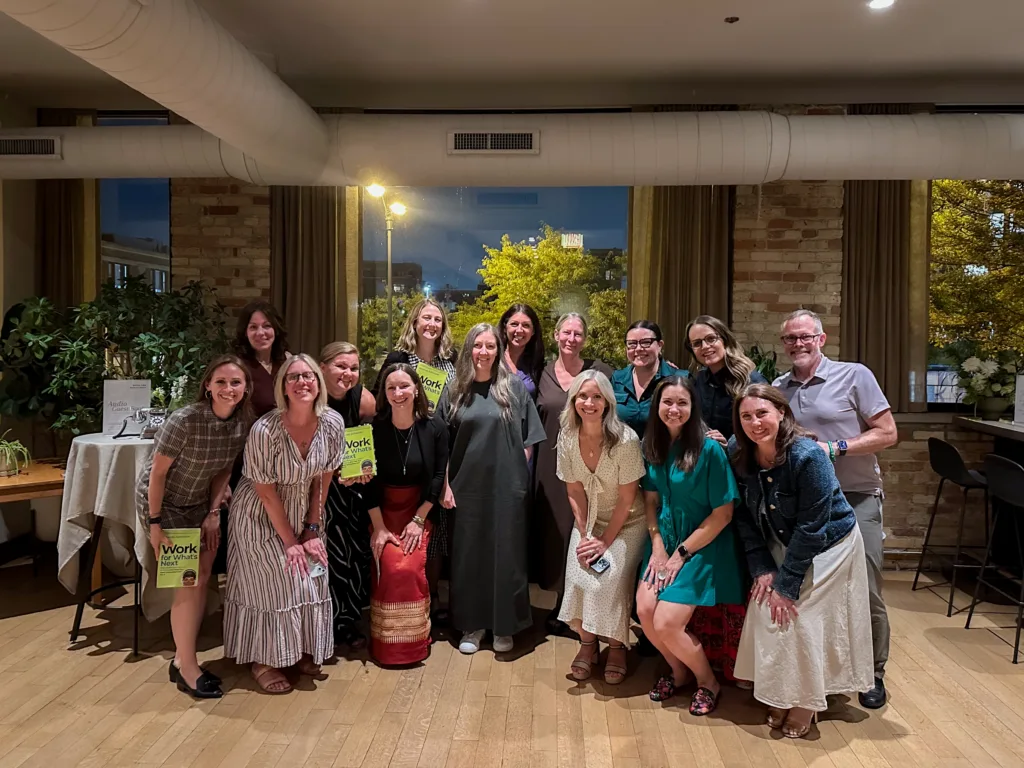
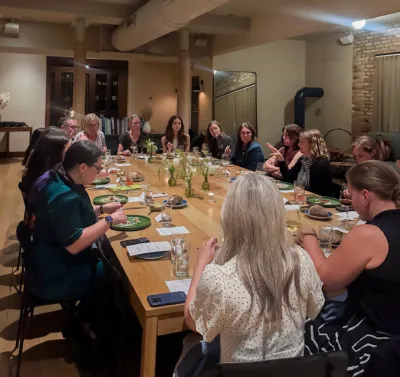
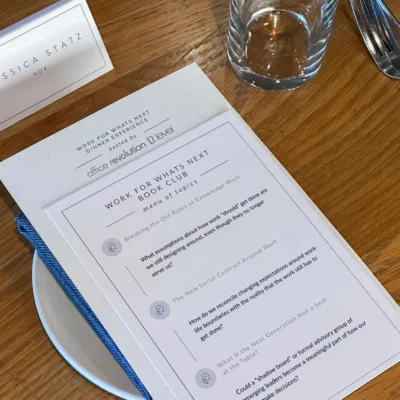
That question sparked a thoughtful conversation at an intimate dinner inspired by Amanda Schneider’s Work for What’s Next. After a summer of reading and reflection, Office Revolution and Level Reps brought design leaders together at Elske to discuss how the changing world of work is influencing their firms, their teams, their clients, and the workplaces we create together.
The answers reflected an industry at an important moment. Guests described a sense of optimism, excitement, and possibility, while also acknowledging the growing complexity facing organizations and the people who help shape their workplaces.
Recognizing the Value Behind Great Design
One theme that emerged was the importance of recognizing design as much more than a finished space.
As workplace challenges become increasingly complex, the greatest value often comes from the thinking that happens before a solution takes shape: asking the right questions, understanding how people work, exploring possibilities, anticipating challenges, and aligning the environment with broader organizational goals.
That requires time, expertise, and collaboration. It also creates an opportunity for designers, workplace partners, and clients to think differently about the process—not simply as a path to a finished product, but as a strategic tool for solving business and people challenges.
Moving From Answers to Exploration
The conversation also challenged the idea that workplace experts must always arrive with a predetermined answer.
The workplace is changing too quickly for a one-size-fits-all approach. What works for one organization—or even one team—may not work for another. Increasingly, the most valuable expertise may be the ability to ask better questions, share what we know, acknowledge what we are still learning, and test new ideas.
That creates a more collaborative relationship between clients, designers, dealers, manufacturers, and other workplace partners. Instead of beginning with an answer, we can begin with a shared understanding of the challenge and work together toward the right solution.
Creating a Workplace Worth Showing Up For
Perhaps nowhere is that collaborative approach more important than in conversations about the role of the office.
Space can play a meaningful role in supporting connection, focus, collaboration, autonomy, and belonging. But the most successful workplaces consider space as part of a larger employee experience—one that also includes culture, leadership, technology, policies, and expectations.
ThinkLab’s research reinforces the opportunity. In its 2026 Power of Place Survey, 83% of end users said getting employees to want to show up is extremely or very important, while 51% said they are struggling to get people there.[1]
That gap raises a more useful question than simply, “How do we get people back to the office?”
How do we create an experience people find valuable enough to choose?
For workplace leaders and designers alike, that opens the door to a much richer conversation about what people need from the office and how the physical environment can help deliver it.
Creating Change With People, Not Just for Them
The dinner also surfaced practical ideas organizations can explore as they navigate change.
Peer mentorship can create stronger connections among employees with similar levels of experience. Advisory groups can give younger employees a meaningful voice in shaping workplace decisions. More transparent project timelines can help clients better understand the work and expertise behind the design process. And flexible approaches to exploratory work can give teams room to investigate ideas before committing to a solution.
While the ideas varied, they shared an important principle: the people affected by change should have a voice in shaping it.
Building What’s Next, Together
If there was one idea that connected the evening’s conversation, it was that the future of work will continue to require curiosity.
The answers won’t always be obvious. Organizations will continue experimenting with how and where people work. Designers will continue exploring how space can better support them. And workplace partners will need to bring research, experience, products, technology, and new ideas together in increasingly thoughtful ways.
Success won’t come from simply repeating what has worked before. It will come from listening, learning, testing, and evolving together.
Perhaps the most valuable thing a workplace partner can say isn’t, “We already know the answer.”
It’s:
“We understand what you’re trying to accomplish. Let’s figure out the best way forward together.”
Source
[1] ThinkLab, Power of Place Survey 2026, as presented in The New Business Case for Physical Space (2026).
