
The office deal has changed. Not just in the numbers, but in the expectations behind them.
Today’s corporate tenants aren’t simply looking for square footage at the right price. They’re looking for a workplace that supports how they work, reflects who they are, and can withstand scrutiny from leadership, HR, and the finance team simultaneously. A recent global survey of more than 235 corporate real estate leaders representing 8.1 million employees found that cost pressure remains the dominant driver of real estate decisions. But close behind it are talent sourcing, operational excellence, and corporate brand. These aren’t lease considerations. They’re workplace strategy considerations.
For CRE brokers, that distinction matters. Deals that close smoothly aren’t just well-priced. They’re well-planned, and the planning starts earlier than most people assume.
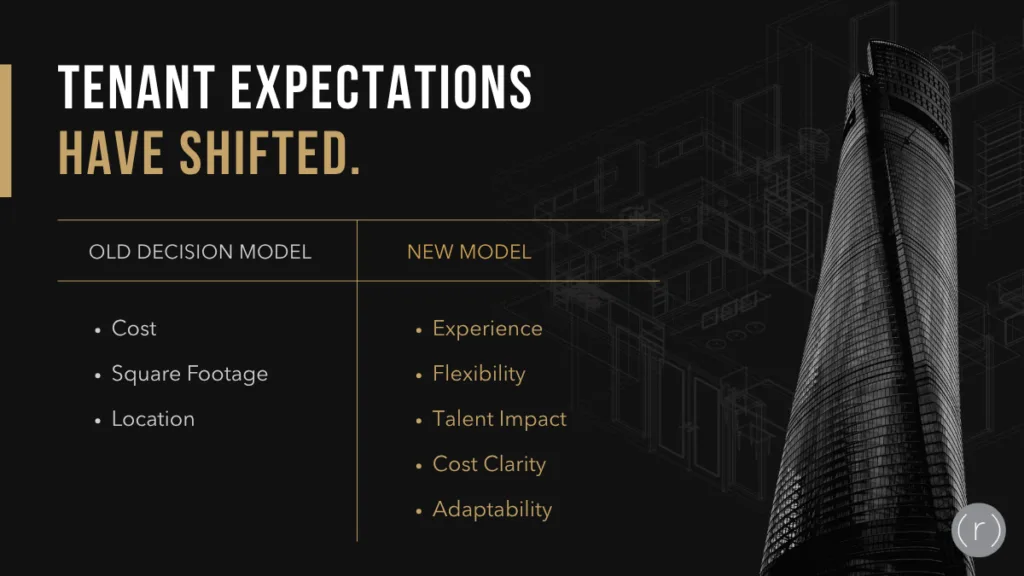
The Tenant Has Already Done the Math
There was a time when tenants finalized a lease and then figured out the workplace. That sequence has quietly reversed itself.
Sophisticated tenants now enter the deal process with a clearer picture of what they want the space to accomplish. They’ve thought about headcount flexibility. They’ve considered what the office needs to signal to candidates and clients. They may have already benchmarked cost-per-seat or consulted with an interior design firm. What they often lack is a clear line between that vision and a realistic plan that can be executed.
This is where deals get complicated. Not at the term sheet stage, but in the planning gap between lease execution and occupancy.
Recent industry research reinforces what brokers observe in the field: uncertainty is the biggest obstacle to action. Political and economic instability, shifting return-to-office policies, and difficulty forecasting ROI are creating hesitation at exactly the moment tenants should be moving forward. Separate workplace research from the same period found that only about 60% of employees feel their workplace supports its primary purpose of fostering collaboration and connection. Tenants know this. The pressure to get the new space right, not just adequate, is higher than it has ever been.
Only about 60% of employees feel their workplace supports its primary purpose of fostering collaboration and connection.
What Tenants Are Actually Evaluating
The flight-to-quality trend isn’t just about building class. It’s about what a space can deliver as an experience. Recent occupier research found that 85% of corporate real estate leaders have raised their expectations and are actively seeking enhanced support from landlords and their project partners. Nearly half said they’re willing to pay a premium for better amenities and services.
That willingness to invest reflects a broader shift: the office is increasingly understood as a strategic business tool, not a line item to minimize. Talent sourcing and retention now rank as the second most important driver of real estate decisions globally, right behind cost. The physical workspace has become part of the talent equation.
For brokers, this creates both an opportunity and a complication. The opportunity: tenants who understand the strategic value of their workplace are more likely to commit decisively to the right space. The complication: those same tenants will ask harder questions earlier, and they’ll expect the people around them, including their broker, to have credible answers.
Talent sourcing and retention now rank as the second most important driver of real estate decisions globally, right behind cost. The physical workspace has become part of the talent equation.
From Lease to Occupancy: Where Deals Lose Momentum
The phase between signed lease and move-in is where well-structured deals can quietly unravel. Budgets that looked aligned on paper become harder to defend once design aspirations are applied to actual product selections. Timelines that seemed reasonable compress under procurement lead times. And decisions that feel like furniture choices turn out to be workplace strategy decisions in disguise.
This is precisely where early planning changes outcomes.
A Closer Look: Filtration Group
When Filtration Group relocated its corporate headquarters to a new 22,465 sq. ft. space in Oak Brook, Illinois, the goal was clear: create a workplace that felt relaxed, functional, and cohesive, one that reflected the company’s brand values and could support a growing team. JLL served as the project management partner, with Whitney Architects leading design.
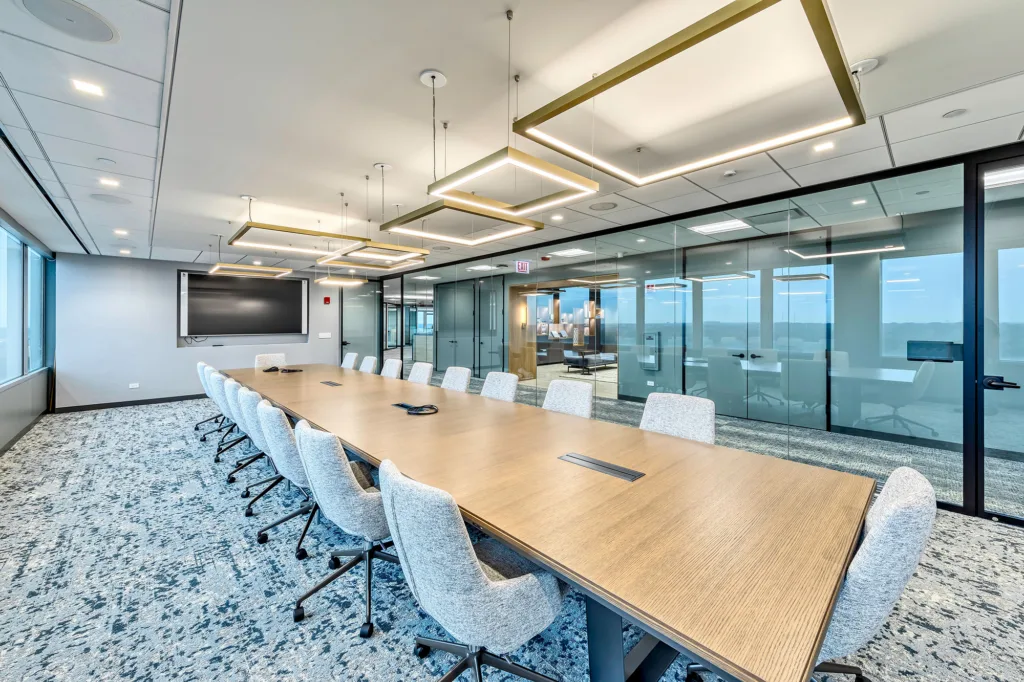
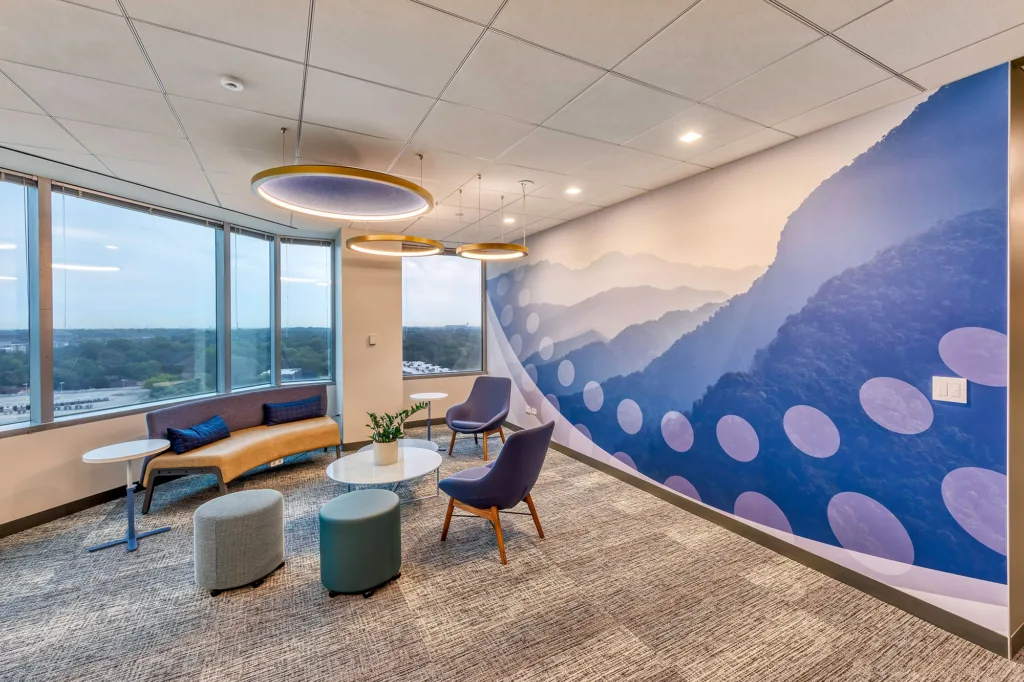

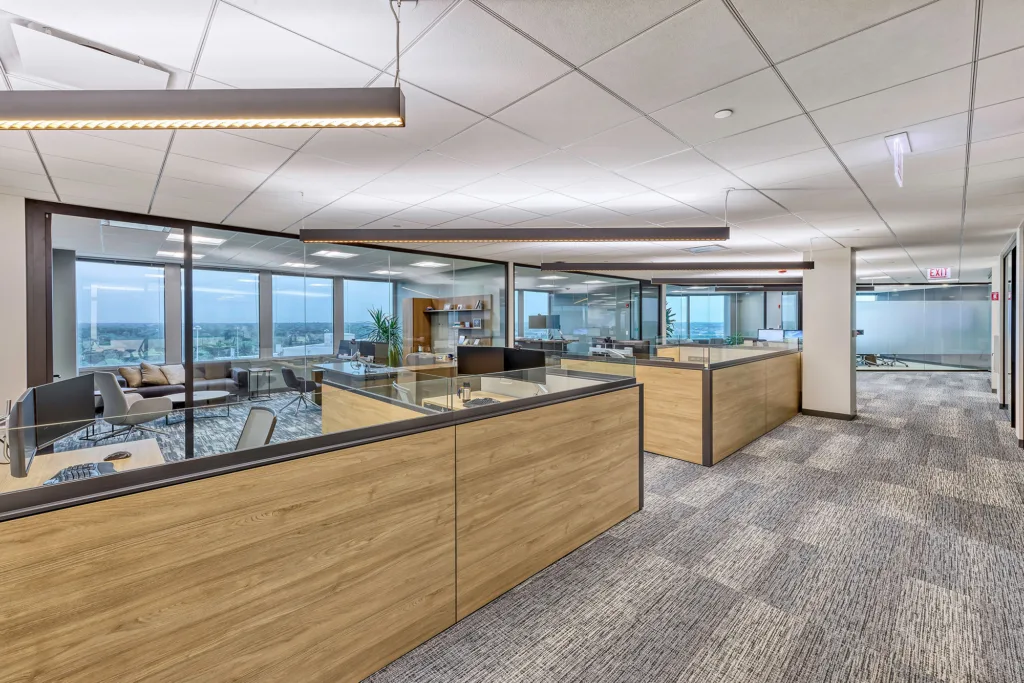
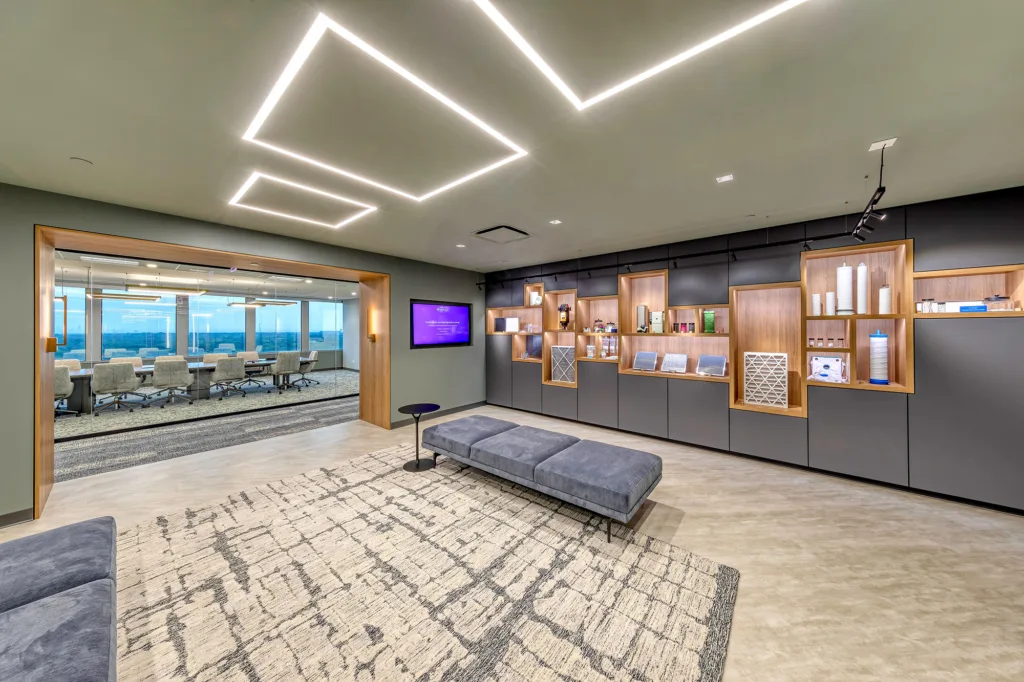
Office Revolution was brought in to translate that vision into execution. Using an Integrated Project Delivery (IPD) model, the team worked alongside Filtration Group, the A&D partner, and the broader project team to align design intent with procurement strategy and operational needs from the start. That close coordination made the difference. Custom elements, including C+D tables and a custom café banquette, were delivered to specification. High-end ancillary pieces elevated the collaborative areas. The result was a headquarters that met the client’s brand expectations, supported their operational needs, and came together on time and on budget.
What made this project work wasn’t just the quality of the furniture. It was the structure of the planning process. When every stakeholder is aligned early on design direction, budget parameters, and timeline expectations, the project moves forward with clarity rather than friction.
That kind of clarity is what a broker’s client needs when they’re committing to a new lease.
The Broker’s Advantage: Introducing Alignment Early
The most effective brokers aren’t just facilitating transactions. They’re helping tenants make better decisions. And one of the highest-leverage decisions a tenant can make is who they bring into the process, and when.
Workplace planning shouldn’t begin after lease execution. It should inform the deal itself. Budget clarity, space feasibility, and realistic timeline expectations are deal considerations, not post-deal afterthoughts. Tenants who understand what their workplace vision will actually cost are better positioned to negotiate, commit, and execute.
Recent market research identifies the top barriers to portfolio change as not simply financial risk, but overall uncertainty about the role of the office and the costs associated with making changes. A broker who helps a tenant arrive at that clarity before the lease is signed isn’t just adding service. They’re protecting the deal.
What the Market is Signaling
The data points in one direction: workplace quality is becoming a market differentiator, and the gap between buildings and between tenants is widening.
Industry research shows that the rent premium commanded by top-tier office space has grown by more than 1,100 basis points since 2019. Office lease sizes are rebounding, with average lease sizes growing approximately 13% over the past two years. The era of reactive downsizing is giving way to more proactive portfolio management, with roughly one in eight occupiers now planning to expand their footprint.
These are tenants who are investing in their workplace. They’re choosing spaces and partners with intention. For brokers, the question isn’t whether these deals are happening. It’s whether you’re positioned as a strategic advisor in them, or a transactional participant.
Office lease sizes are rebounding, with average lease sizes growing approximately 13% over the past two years.
The Strategic Partner Question
Tenant expectations aren’t just raising the bar on buildings. They’re raising the bar on everyone in the deal. When a corporate tenant is making a decision that touches talent, culture, operations, and finance all at once, they need partners who can see across those dimensions.
Office Revolution works with CRE brokers to bring workplace planning into the deal process earlier, providing budget clarity, design alignment, and execution capability that supports the tenant’s decision-making and protects the broker’s deal timeline. The Filtration Group project is one example of what that looks like in practice. There are many others.
The office deal has changed. The question is whether the partners around the table have changed with it.
Interested in how early workplace planning can support your next deal? Connect with the Office Revolution team below.
Sources
What Occupiers Want 2025, Cushman & Wakefield and CoreNet Global. Data referenced includes occupier priorities, landlord support expectations, and portfolio trends from a survey of 235+ CRE leaders representing 8.1 million employees globally.
Reimagining Workplaces: Why Efforts Fall Short and How to Get It Right, Cushman & Wakefield, 2025. Data referenced includes employee workplace experience and collaboration findings.
